Reform Physiotherapy and Pilates
  • Home
  • About
    • About Us
    • Our Team
    • Careers
    • FAQ
  • Physiotherapy
  • Womens Health
    • Womens Health Services
    • Mummy MOT (Postnatal Physio Assessment)
  • Reformer Pilates
    • Pilates
    • Pilates Classes
    • Pilates Teacher Training Courses
      • Pilates Teacher Training Courses
      • Reformer Pilates Jumpboard Course
  • Strength & Testing
    • Strength & Conditioning
    • Medical Fitness Testing
  • Fees
  • Contact Us
  • Appointments
  • Home
  • About
    • About Us
    • Our Team
    • Careers
    • FAQ
  • Physiotherapy
  • Womens Health
    • Womens Health Services
    • Mummy MOT (Postnatal Physio Assessment)
  • Reformer Pilates
    • Pilates
    • Pilates Classes
    • Pilates Teacher Training Courses
      • Pilates Teacher Training Courses
      • Reformer Pilates Jumpboard Course
  • Strength & Testing
    • Strength & Conditioning
    • Medical Fitness Testing
  • Fees
  • Contact Us
  • Appointments
Make A BOOKING
Make A BOOKING
Anne2017-07-17T15:15:27+00:00

We see people every week in the clinic with a ‘pulled’ hamstring or ‘tightness’ in their hamstring. It is a common injury that can be prevented in most cases. The hamstring (at the back of the thigh) is made up of 3 parts- semimembranosus, semitendinosus and biceps femoris, and collectively their main function is to pull your knee back (as in kicking your bottom), and too extend your hip backwards.

Most hamstring injuries are due to the muscle being loaded too much too soon. This means the hamstring is being asked to work harder than it has the capacity to do so. This can result in a tear in the muscle. An example of this, would be someone who has a desk job, sitting most of the day, and decides to ‘get fit’ so starts running at weekends pushing themself as much as they can. Now, although this is good for your cardiovascular fitness, this is a shock to the body, and if the muscle is unable to cope with this sudden increased demand on it, it may result in a tear in the muscle or a tendon injury.

Another common method of hamstring injury is a sudden pain (and potentially a ‘pop’ feeling) that can occur during a fast over-stretching motion such as sprinting or kicking or sudden deceleration of running. Hamstring tears (or strains) can be graded 1-3, and with a thorough assessment by your Physiotherapist, this can be determined which will help to get a timeline on how long your rehabilitation will take.

If you have pain in your hamstring that is persisting or you suspect a strain, get an assessment with a Physiotherapist to ensure you receive the correct treatment. Don’t let it drag on and become a ‘niggly pain’-the sooner it is treated, the faster the recovery!


Even better…try to avoid getting hamstring injuries in the first place! Here are some tips: (Source Therapeutic Heat)

  • Don’t overload your hamstring too much too soon: do a gradual approach to any new exercise or change in routine. Follow the 10% rule-don’t increase your training more than 10% per week (in terms or weight/distance/speed).
  • Maintain sufficient flexibility: hamstring stretching such as the one below is a simple stretch to improve hamstring flexibility. This should be held for 30secs-1min x 3 times, and done 3/week.
  • Warm up properly: a good warm up can help prepare your muscle for exercise. Dynamic exercises such as lunges, squats, or a light walk/jog for 5-10mins before intense exercise can help warm up the muscle.
  • Strengthening: When the hamstring is strong, it should be more resistant to injury. The Nordic Hamstring Curl is an excellent exercise with good evidence demonstrating that is prevents hamstring strains.
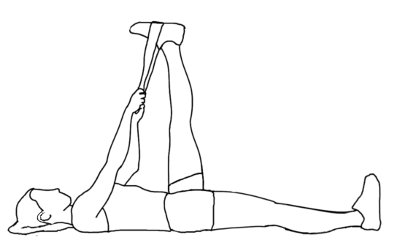
hs-stretch

Hamstring stretch using a band/towel/belt.


Nordic Hamstring Curl:


If you would like to be assessed and treated by a Chartered Physiotherapist, call 086 3582911. Anne 🙂

Related Posts

Exercise and Pregnancy

Pregnancy is a unique time in a woman's life where the body goes through so many changes that we can... read more

All about shin splints!

With the good weather and marathon season fast approaching, we’ve started to see an increase in the number of patients... read more

Abdominal separation and exercise

Abdominal separation (rectus diastasis or DRAM) is a common condition which can occur  in pregnant or post-partum women. The six... read more

Reformer Pilates Jumpboard Course

REFORMER PILATES JUMPBOARD COURSE

Reformer Pilates Jumpboard Training Course: Nov 7th 2026

 This upcoming three-hour training course provides an... read more

Its all about the Mo-Stability!

Here at Reform Physiotherapy and Pilates we love getting people moving! I see people who are restricted in their movement... read more

Get running!

Running is great...its free, you can it do it anytime, anywhere, and it has numerous health benefits! Anyone can run,... read more

Physiotherapy is as effective as surgery for low back pain (and without any risks!)

A recent study published in the US has shown that Physiotherapy is as effective as surgery for people suffering with... read more

Stiff hips? Try these 5 simple exercises at home…

A common complaint we see regularly is people feeling their hips are 'tight' or 'stiff'. Often people can get cramps/stiffness... read more

How to exercise safely when pregnant

It is important to remain active throughout your pregnancy, but a lot of women are unsure how to do this... read more

What is a sports massage?

Here at Reform Physiotherapy and Pilates in Malahide, we offer sports massage treatments for 30mins, 45mins or 60mins. This is... read more

Recent Posts

  • Reformer Pilates Jumpboard Course April 13, 2026
  • Pilates Teacher Training Courses October 20, 2023
  • Exercise and Pregnancy April 20, 2020
  • 5 simple tips to help manage back pain April 14, 2020
  • 5 tips on how to start running (video) April 8, 2020

Recent Comments

    Categories

    • Uncategorized (52)
    • Manor House, 3 Church Rd, Malahide, Co Dublin, K36 E284
    • info@reformphysiotherapy.ie
    • 086 358 2911

    About Us

    • ADDRESS
      • Suite 6, Manor House
      • 3 Church Road
      • Malahide
      • Co.Dublin
      • K36 E284

    Our Services

    • Physiotherapy
    • Reformer Pilates
    • Womens Health
    • Chronic Pain
    • Vestibular Physio
    • Musculoskeletal
    • Back Pain
    • Post Surgery Rehabilitation

    Opening Hours

    • Mon : 7:00 am to 9:15 pm
    • Tues : 7:00 am to 9:15 pm
    • Weds :7:00 am to 9:15 pm
    • Thurs : 7:00 am to 9:15 pm
    • Fri :  8:00 am to 5:30 pm
    • Saturday: 8:00 am to 1:00 pm
    • Sunday: Closed

    Reform Physiotherapy© 2024. All Rights Reserved.