Reform Physiotherapy and Pilates
  • Home
  • About
    • About Us
    • Our Team
    • Careers
  • Physiotherapy
  • Womens Health
    • Womens Health Services
    • Mummy MOT (Postnatal Physio Assessment)
  • Reformer Pilates
    • Pilates
    • Pilates Classes
    • Pilates Teacher Training Courses
  • Strength & Testing
    • Strength & Conditioning
    • Medical Fitness Testing
  • Fees
  • Contact Us
  • Appointments
  • Home
  • About
    • About Us
    • Our Team
    • Careers
  • Physiotherapy
  • Womens Health
    • Womens Health Services
    • Mummy MOT (Postnatal Physio Assessment)
  • Reformer Pilates
    • Pilates
    • Pilates Classes
    • Pilates Teacher Training Courses
  • Strength & Testing
    • Strength & Conditioning
    • Medical Fitness Testing
  • Fees
  • Contact Us
  • Appointments
Make A BOOKING
Make A BOOKING
Anne2016-08-08T09:57:08+00:00

With the good weather and marathon season fast approaching, we’ve started to see an increase in the number of patients in the clinic presenting with shin splints. While not often serious shin splints can be quite debilitating for athletes.

Shin splints, also known as medial tibial stress syndrome, is an overuse injury of the shin area. It is pain below the knee on either the outside or inside of the shin bones. In the early stage of shin splints pain is worse at the beginning of exercise and reduces during exercise. However if left untreated and the injury progresses, pain occurs with less activity and may even occur at rest.

For beginner runners shin splints can result due excessive training too soon or for experienced runners due to a change in mileage, surface or speed.


Treatment for Shin splints

Evidence shows that rest is an important treatment in the acute stage of shin splints. All aggravating activities should be stopped for approximately 1-6 weeks until pain free. NSAIDs can be taken for pain relief. Ice should be applied to the affected area post exercise for 10 minutes. Low impact exercises such as swimming, cross trainer and stationary bike can replace running during this stage.


Following this your training will need to be modified. When returning to running its important to gradually increase your distance ie commence  with fast walking progressing to running as able. Uneven, very firm surfaces and hill running should be avoided. Proper-fitting shoes with adequate shock absorption should be worn and replaced every 250-500 miles. Orthotics may be appropriate for individuals with over-pronated feet.


Stretching and strengthening exercises are important in the treatment of shin splints. Having completed a full assessment, your Chartered Physiotherapist can advise you on appropriate exercises for you. Below are 3 examples of exercises that are effective in treating shin splints.


Calf stretching

Inadequate stretching of the calf muscles can result in shortened calves and altered biomechanics in the leg contributing to the cause of your shin splints. Stretches for the calves should be done pre and post training.

Place both feet pointing forward, keep the front knee bent and back knee straight and lean your hips forward. Hold each stretch for 30 seconds and repeat 3 times on each leg.
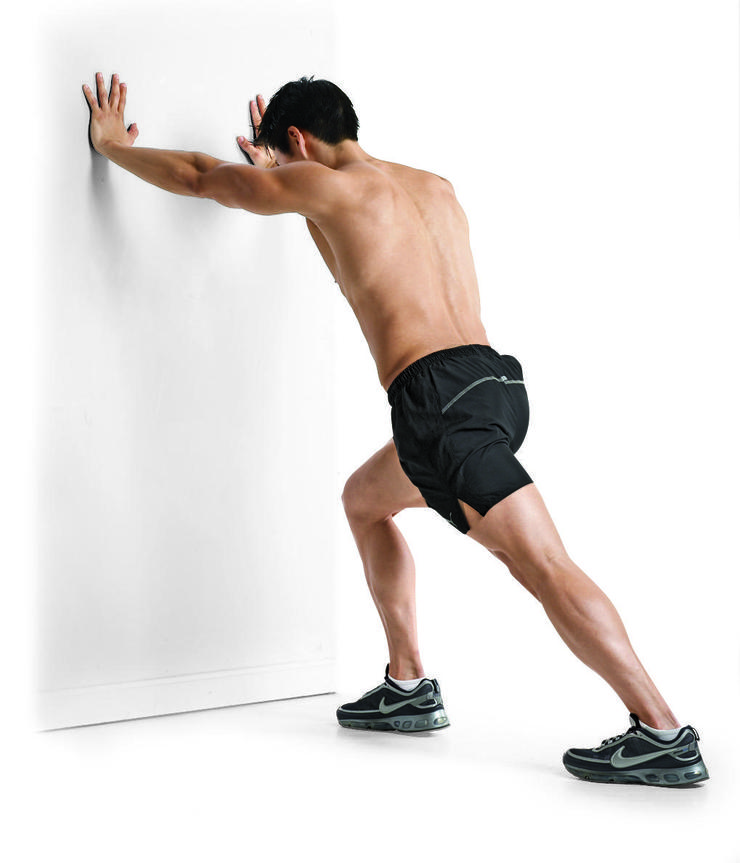
calf stretch

 Foam rolling

In a four point position slowly roll up and down the muscle of the front of the shin. Focus on any particularly tender areas, moving slower over these points. This technique can also be done with a tennis ball. Do x 2-4 mins per shin.
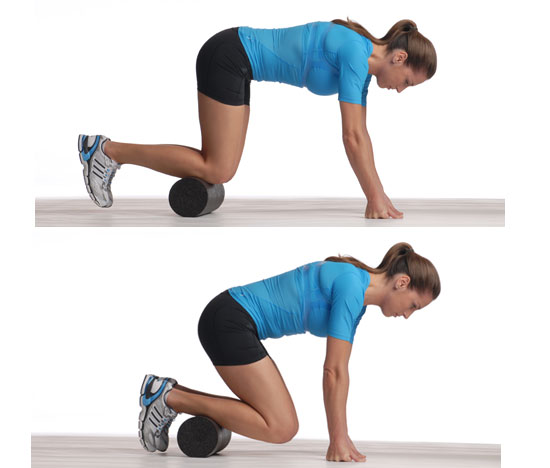
FR shin splints

 Heel walking

Weak shin muscles( tibialis anterior) can often contribute to the cause of shin splints. This muscles main function is to dorsiflex the ankle and so strengthening can help prevent/treat shin splints. Complete heel walking for 3-5 minutes, twice daily.
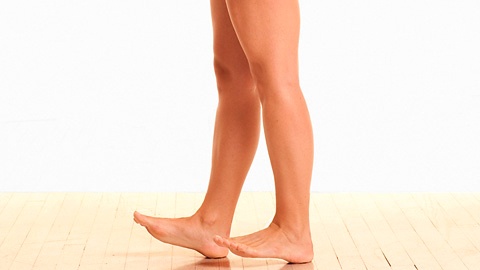
 

Heel toe walking


If your shin splints are persisting after trying above exercises, call us at 086 3582911 for a full assessment with a Chartered Physiotherapist. 🙂


Related Posts

Exercise and Osteoporosis

What is Osteoporosis? Osteoporosis is a disease that affects the strength of the bones. In an individual with OP the skeletal... read more

Osgood shlatters…what is it?

Every month we get a few children and teenagers coming in with knee pain. Through a detailed examination, a Chartered... read more

Pilates for athletes!

There are a growing number of athletes that are speaking out about their love of pilates. Brian O' Driscoll, Katy... read more

Gift vouchers now on sale!

Looking for a unique and health-promoting present for someone for Christmas?! Well, Reform Physiotherapy and Pilates gift vouchers are perfect... read more

Abdominal Separation and Pilates

Abdominal separation (rectus diastasis) is a common condition which can occur  in pregnant or post-partum women. The six pack muscle... read more

We have moved!

I am delighted  to announce that Reform Physiotherapy and Pilates has moved premises to Manor House, 3 Church Rd, Malahide,... read more

The best ‘quick fix’ treatment out there-Dry needling!

Dry needling is a great type of Physiotherapy treatment that is becoming more and more popular due to its fast... read more

Physiotherapy is as effective as surgery for low back pain (and without any risks!)

A recent study published in the US has shown that Physiotherapy is as effective as surgery for people suffering with... read more

All about work-related upper limb pain (or repetitive strain injury)

Repetitive strain injury (RSI) can be an unpleasant side affect of carrying out repetitive activities at work. This includes being... read more

Abdominal separation and exercise

Abdominal separation (rectus diastasis or DRAM) is a common condition which can occur  in pregnant or post-partum women. The six... read more

Recent Posts

  • Pilates Teacher Training Courses October 20, 2023
  • Exercise and Pregnancy April 20, 2020
  • 5 simple tips to help manage back pain April 14, 2020
  • 5 tips on how to start running (video) April 8, 2020
  • Exercise and pregnancy – the current research August 9, 2018

Recent Comments

    Categories

    • Uncategorized (54)
    • Manor House, 3 Church Rd, Malahide, Co Dublin, K36 E284
    • info@reformphysiotherapy.ie
    • 086 358 2911

    About Us

    • ADDRESS
      • Suite 6, Manor House
      • 3 Church Road
      • Malahide
      • Co.Dublin
      • K36 E284

    Our Services

    • Physiotherapy
    • Reformer Pilates
    • Womens Health
    • Chronic Pain
    • Vestibular Physio
    • Musculoskeletal
    • Back Pain
    • Post Surgery Rehabilitation

    Opening Hours

    • Mon : 7:00 am to 9:15 pm
    • Tues : 7:00 am to 9:15 pm
    • Weds :7:00 am to 9:15 pm
    • Thurs : 7:00 am to 9:15 pm
    • Fri :  8:00 am to 5:30 pm
    • Saturday: 8:00 am to 1:00 pm
    • Sunday: Closed

    Reform Physiotherapy© 2024. All Rights Reserved.