Reform Physiotherapy and Pilates
  • Home
  • About
    • About Us
    • Our Team
    • Careers
  • Physiotherapy
  • Womens Health
    • Womens Health Services
    • Mummy MOT (Postnatal Physio Assessment)
  • Reformer Pilates
    • Pilates
    • Pilates Classes
    • Pilates Teacher Training Courses
      • Pilates Teacher Training Courses
      • Reformer Pilates Jumpboard Course
  • Strength & Testing
    • Strength & Conditioning
    • Medical Fitness Testing
  • Fees
  • Contact Us
  • Appointments
  • Home
  • About
    • About Us
    • Our Team
    • Careers
  • Physiotherapy
  • Womens Health
    • Womens Health Services
    • Mummy MOT (Postnatal Physio Assessment)
  • Reformer Pilates
    • Pilates
    • Pilates Classes
    • Pilates Teacher Training Courses
      • Pilates Teacher Training Courses
      • Reformer Pilates Jumpboard Course
  • Strength & Testing
    • Strength & Conditioning
    • Medical Fitness Testing
  • Fees
  • Contact Us
  • Appointments
Make A BOOKING
Make A BOOKING
Anne2018-03-01T14:17:26+00:00

A common complaint we see regularly is people feeling their hips are ‘tight’ or ‘stiff’. Often people can get cramps/stiffness feelings in their hips due to weakness, inactivity or an injury. Also, more and more people are sitting for a long proportion of their day-this in itself can contribute to hips feeling tight. Try limit the amount of time you sit daily, giving yourself short breaks or trying to use a sit-to-stand desk where possible.


Try these simple stretches at home every day to see if they alleviate your symptoms over 2 weeks. If your symptoms persist, attend a Chartered Physiotherapist for a thorough assessment.


1. Glut stretch:

Lying on your back, put your left foot over your right knee. Put your hands behind your right thigh and pull it up towards your chest. Pull up until you feel a deep stretch in your left buttock (gluts). Breathe so that you relax into stretch. Hold for 30 secs and do x2 each side.
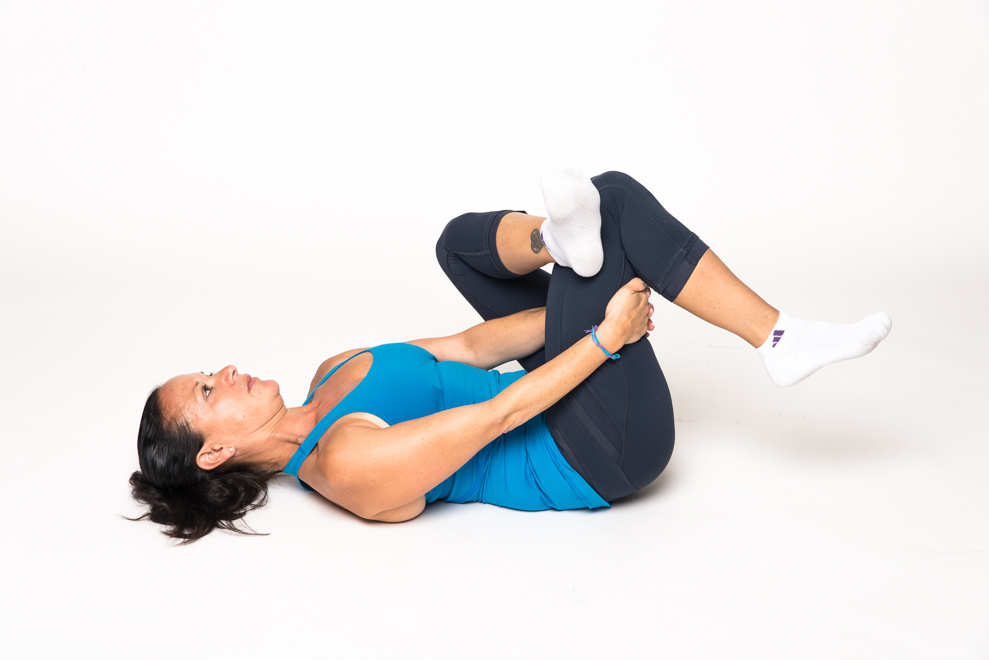
glut-stretch


2. Adductor stretch:

Sitting up, bring the soles of your feet together and pull them in towards your groin. Let your knees fall out to the side or push them outwards with your elbows. Lean forward into the stretch to make it stronger. You should feel this in your groin/inner thighs. Hold for 30 secs and repeat x 2.
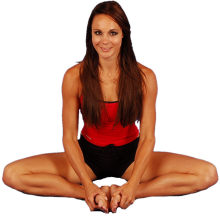
 

add-stretch


3. Hip flexor stretch:

In a kneeling lunge position, stay upright and lean forward on front leg. Try tuck your bum in under to tilt your pelvis back.  Make this as wide as possible and stay upright. Hold x 30 secs and do x2 each side.
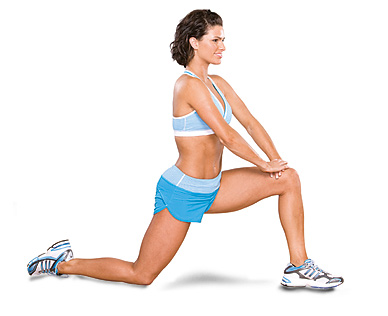


hip-flexor-stretch


4.  Hip internal rotation:

Lying on your front, with your knees together and bent up so feet are in the air. Let your ankles drop out towards the floor. Try relax to let them drop out as far as possible. You can ask someone to apply light pressure on your ankles to encourage them out a bit more. Hold x 1-2 mins.
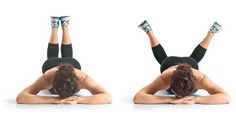
hip-internal-rotation


5. Pigeon stretch:

On your front, tuck one leg in under you with the foot up as close to your stomach as possible. Stretch the other leg out behind you and lean down onto it. You can stay on your forearms, or let your head rest down towards the floor to make it a stronger stretch. Hold x 1-2 mins.
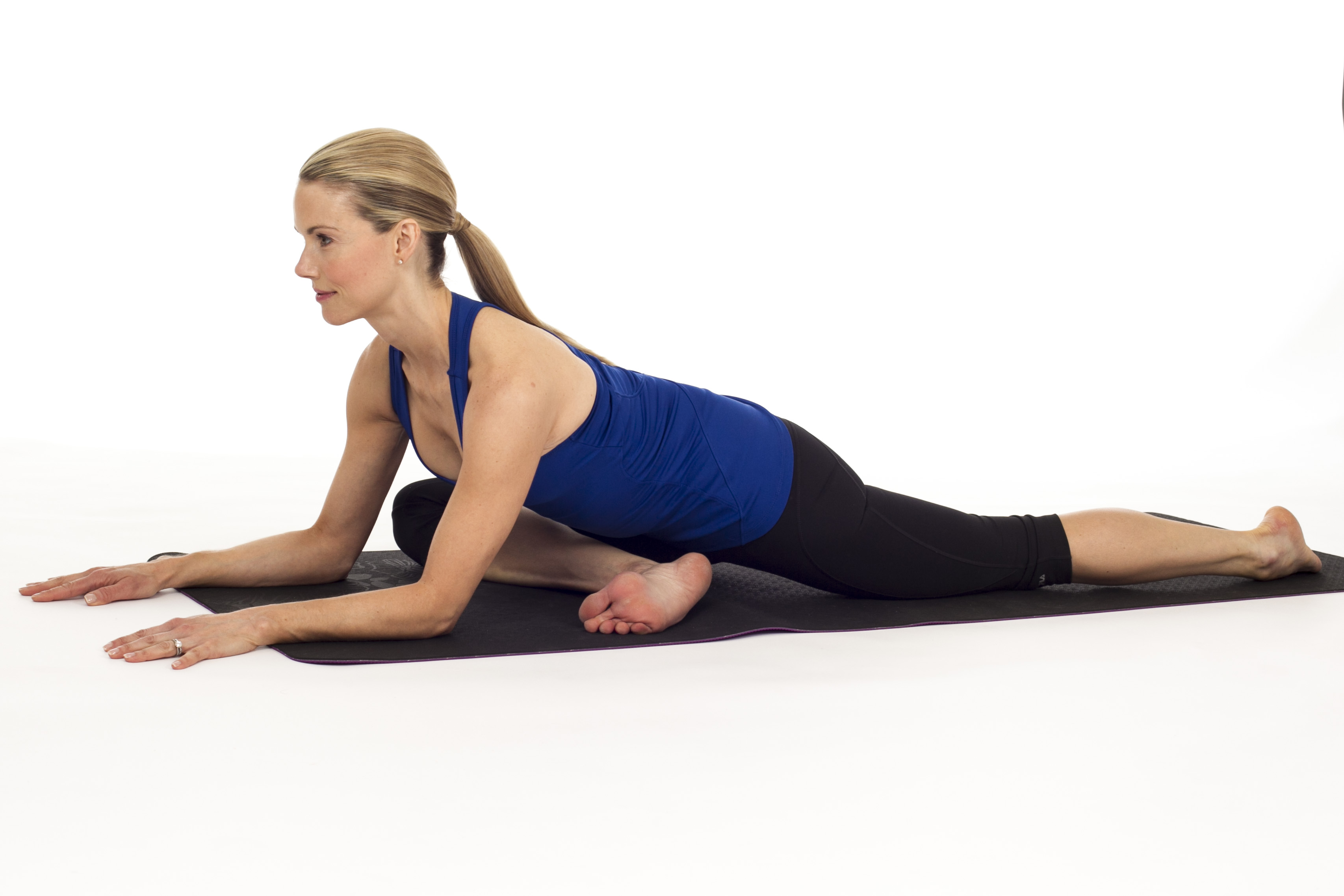
 

pigeon-stretch


Enjoy your stretching! Anne 🙂


Related Posts

ITB Pain

Your Iliotibial band (ITB) runs from the outside of your knee up to your hip. When tight it can cause... read more

Why Clinical Pilates can help people with low back pain…

Pilates is a form of exercise created by Joseph Pilates in the 1920’s as a way of keeping troops fit... read more

Why Physios at Reform don’t use ultrasound and other electrotherapy….

Some clients ask us if we do ultrasound/electrotherapy or tell us of previous experience getting these treatments with other physios.... read more

All about work-related upper limb pain (or repetitive strain injury)

Repetitive strain injury (RSI) can be an unpleasant side affect of carrying out repetitive activities at work. This includes being... read more

Make your exercise count!

A lot of Irish people consider 'walking' their main form of exercise. Walking can be excellent exercise for many people-it... read more

Brighter evening tempting you out running….

Brighter evening tempting you out running....great! But do not make the mistake of many of scale up too fast causing... read more

Feeling Christmassy!!

                      It's getting Christmassy at Reform Physiotherapy! To say Happy Christmas to everyone coming to our Pilates classes, this week and... read more

Muscle spasms-what to do when they happen?!

If anyone has ever had a muscle go into spasm, they will know how painful it can be! Although muscles... read more

All about shin splints!

With the good weather and marathon season fast approaching, we’ve started to see an increase in the number of patients... read more

Abdominal separation and exercise

Abdominal separation (rectus diastasis or DRAM) is a common condition which can occur  in pregnant or post-partum women. The six... read more

Recent Posts

  • Reformer Pilates Jumpboard Course April 13, 2026
  • Pilates Teacher Training Courses October 20, 2023
  • Exercise and Pregnancy April 20, 2020
  • 5 simple tips to help manage back pain April 14, 2020
  • 5 tips on how to start running (video) April 8, 2020

Recent Comments

    Categories

    • Uncategorized (55)
    • Manor House, 3 Church Rd, Malahide, Co Dublin, K36 E284
    • info@reformphysiotherapy.ie
    • 086 358 2911

    About Us

    • ADDRESS
      • Suite 6, Manor House
      • 3 Church Road
      • Malahide
      • Co.Dublin
      • K36 E284

    Our Services

    • Physiotherapy
    • Reformer Pilates
    • Womens Health
    • Chronic Pain
    • Vestibular Physio
    • Musculoskeletal
    • Back Pain
    • Post Surgery Rehabilitation

    Opening Hours

    • Mon : 7:00 am to 9:15 pm
    • Tues : 7:00 am to 9:15 pm
    • Weds :7:00 am to 9:15 pm
    • Thurs : 7:00 am to 9:15 pm
    • Fri :  8:00 am to 5:30 pm
    • Saturday: 8:00 am to 1:00 pm
    • Sunday: Closed

    Reform Physiotherapy© 2024. All Rights Reserved.